
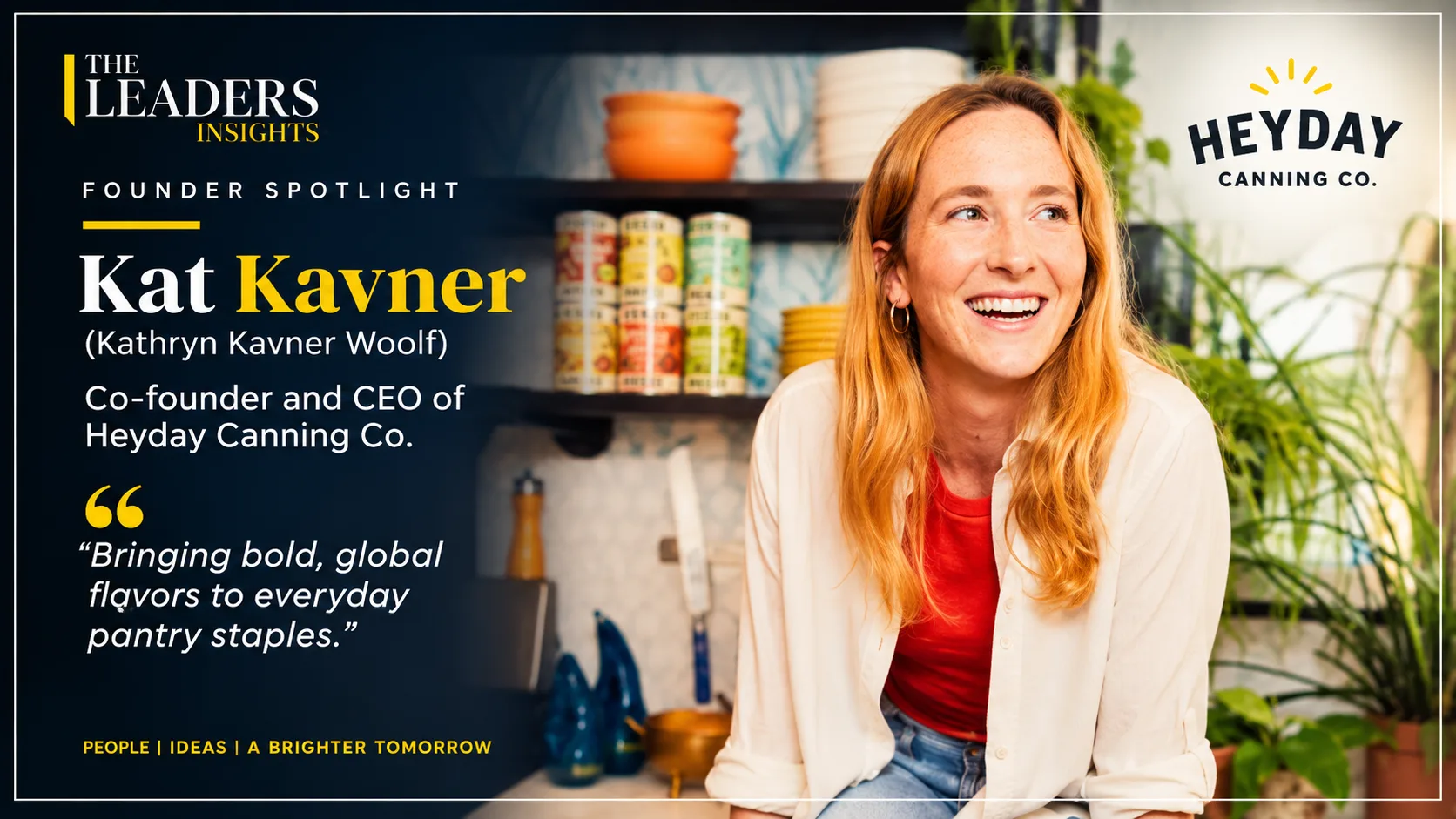
Kat Kavner and Heyday Canning: Giving Canned Food a Fresh New Identity
Kat Kavner and Jaime Tulley built Heyday Canning around a familiar weeknight problem. What can you make for dinner when you have a few pantry staples and very little time? Their answer was a can of beans with enough flavor to shape the whole meal.
After a few years on grocery shelves, Heyday Canning had a problem that a design award or a social media hit could have easily hidden. Shoppers noticed its colorful labels, but some still saw the product as an expensive can of beans. They had no way to tell how much sauce was inside or how easily it could turn rice, greens, or toast into dinner. Co-founder and CEO Kat Kavner Woolf said the brand was asking shoppers to do too much work to understand what they were buying.
So Heyday put “Saucy Beans” on the label and added photos that showed the beans in their sauce. The change brought the product closer to the moment the founders had built it for. Before adding the can to their cart, shoppers could see how it would fit into their dinner plans. Getting that message right took years of recipe testing, grocery launches, and an unusual New York pop-up where customers paid in beans.
What Two Former Coworkers Saw in the Canned Food Aisle
Kavner and Tulley met while working at Sweet Earth Foods. Kavner brought experience in branding and marketing from Sweet Earth and Clif Bar. Tulley came from research, development, and operations. In spring 2020, as shoppers stocked up on pantry staples, the two browsed the canned food aisle and wondered what meals they could make with the cans on the shelves.
Beans gave them a place to start. A can of plain chickpeas can go into dozens of recipes, but the person making dinner still has to decide how to season it and what else to add. Heyday’s first products took on more of that work by cooking the beans in sauces. Tomato Alla Vodka Cannellini Beans could go over pasta or toast. Coconut Curry Chickpeas could go over rice. Customers could turn a can into dinner with ingredients they already had.
The founders chose to focus on beans, one category within canned food. Launching with six varieties gave them room to try different flavors while keeping the product line easy to explain. The products belonged together because each could do the same job for the shopper, even if the meals they inspired were quite different.
The Recipe Had to Survive the Can
A sauce can taste right in a saucepan and change once it goes through commercial canning. Kavner told FoodNavigator that working with a retort, the equipment that processes sealed cans using heat, was a learning curve. The founders moved from kitchen experiments to testing at a university food science facility with a canning line. They also worked with recipe developer Ali Slagle on the original line.
Finding a contract manufacturer brought a different challenge. Kavner said it was hard to find a manufacturing partner during the pandemic. Heyday’s recipes made the search harder because they called for more complex ingredient combinations than manufacturers typically handled. The founders eventually found a partner, and the six varieties debuted at Sprouts Farmers Market in late 2022. In early 2023, FoodNavigator reported that Heyday had secured nationwide listings at Whole Foods Market.
The manufacturing story is easy to overlook once the finished cans are on a shelf. For a consumer products founder, it is where much of the idea becomes real. A recipe that earns compliments in a test kitchen has to produce a result customers can recognize when they buy another can weeks later. In Heyday’s case, the founders needed the sauce to come through after processing because that was what gave shoppers a reason to choose it in the first place.
The Store Where Beans Were the Currency
By the end of 2023, Kavner saw a gap between Heyday’s retail distribution and how many people knew the brand. Her brother Reed Kavner, a comedy producer, suggested a store that would accept beans as payment. From November 30 to December 3, Heyday ran its Bean Swap in lower Manhattan. Visitors could bring in a can of beans from any brand and exchange it for a can of Heyday. Shoppers could trade extra cans for merchandise. Heyday donated the cans it collected to City Harvest and added one can of its own for every can it received.
The rules were simple enough to tell a friend. Bring beans, leave with beans. Visitors could take part without already knowing the brand, and the exchange gave them a product to try at home. Inc. reported that people lined up down the block and that Heyday had to arrange an overnight shipment to keep the pop-up stocked. Videos from the event also gained traction on TikTok.
The campaign worked as an introduction to the product because the joke and the sample were part of the same experience. Someone might turn up because the idea sounded funny and leave with a flavor they would otherwise have walked past in the grocery store. For a marketing leader, those are two outcomes worth tracking separately. The line outside the store shows that people wanted to participate. What they do the next time they shop is a different measure.
Why Heyday Changed Packaging That Already Stood Out
The original labels, developed with design studio Outline, used blocks of color, distinctive lettering, and illustrations inspired by the ingredients. Heyday’s cans caught shoppers’ attention in an aisle where people usually compared products by type and price. The design also gave the young brand a look people could recognize across several flavors.
After years in stores, Kavner said customer conversations revealed what the original label had left open to interpretation. People who tried Heyday’s beans for the first time were surprised by how much sauce came in each can. Heyday worked with Flock Creative to rename the line Saucy Beans and add photos that showed shoppers what the beans and sauce looked like straight from the can.
That is a different design job from the one the original label had at launch. A distinctive package can win a glance. Clear packaging helps shoppers decide what to buy. When reviewing a redesign, brand managers can ask what a first-time shopper learns about the product in just a few seconds. Can they tell which product they are looking at, what they would use it for, and why they might pay more for it?
Growing the Brand Without Giving Every Can the Same Job
Heyday expanded into soups, stews, and chilis at Whole Foods in 2024. The lineup included flavors such as Creamy Coconut Corn Chowder, Lemon Parmesan Noodle Soup, and Grilled Cheese Tomato Soup. Kavner told Nosh that Heyday and Whole Foods had discussed several canned food concepts before focusing on soups and chilis. For shoppers, the new line offered something they could heat and serve when they wanted the can to do most of the work.
In 2025, Heyday introduced Perfectly Seasoned Beans for cooks who already had a recipe in mind. They could drain the beans and use them (in place of plain canned beans) to add extra flavor to the dish. Heyday also expanded its retail presence to Target, where the retailer lists varieties including Tomato Alla Vodka Cannellini Beans and Enchilada Black Beans.
For an executive team, the distinction between the lines is worth preserving as distribution grows. A soup, a can of saucy beans, and a can of seasoned beans can all make dinner easier. Each fits a different stage of the decision. One shopper wants to heat something now. Another has leftover rice and wants to turn it into a meal. A third has a recipe open and needs an ingredient. Those are three recognizable reasons to buy, and each gives the company a way to judge whether a new product has earned its place in the range.
Heyday’s story began with two founders looking at an ordinary grocery shelf and seeing room for a different kind of product. The label refresh brought them back to that same shelf with a more specific question. Could a shopper see what the can was for without hearing the founder explain it? The new name and photography put the answer where the customer needed it, in the few seconds before deciding what to take home.