
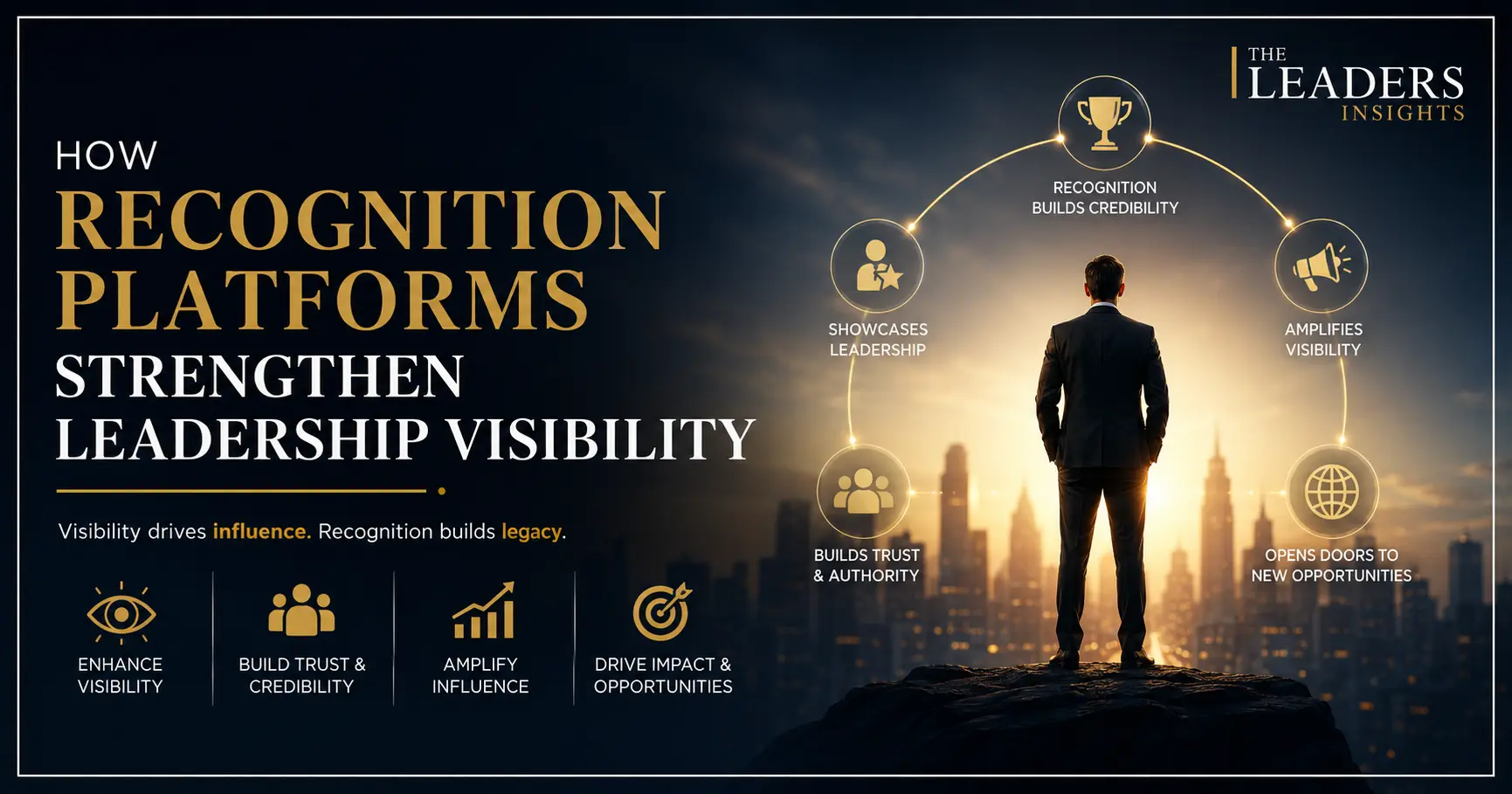
How Recognition Platforms Strengthen Leadership Visibility
Leadership visibility has become a strategic asset in the modern American business landscape. For CEOs, founders, university leaders, healthcare executives, and industry experts, influence is no longer built only inside boardrooms or institutional corridors. It is shaped across public platforms, professional networks, media channels, conferences, rankings, awards, and digital communities where credibility is constantly observed, compared, and interpreted.
In the United States, where leadership is closely connected to reputation, trust, and market positioning, recognition platforms play an increasingly important role. They do more than highlight achievement. At their best, they create a structured platform where leadership stories, institutional impact, innovation, and executive authority can reach a wider audience.
For modern leaders, visibility is not vanity. It is part of how trust is built.
Recognition Is Becoming a Leadership Signal
Recognition platforms have evolved beyond traditional award lists or media features. Today, they serve as signals of credibility in a crowded leadership environment. Recognition from a respected platform can help validate a leader’s work, elevate their public profile, and position their contributions within the broader story of industry progress.
This matters because executive audiences are selective. Investors, partners, boards, academic communities, healthcare networks, and talent markets all look for signals that help them understand who is leading with substance.
A founder building a fast-growing company may gain visibility through market performance, but recognition can help communicate the quality of leadership behind that growth. A university president may be known within academic circles, but recognition can extend their influence into policy, innovation, philanthropy, and global education conversations. A healthcare executive may lead an important transformation, but a credible platform can bring that work into broader industry awareness.
Recognition does not replace performance. It amplifies performance when there is genuine substance behind it.
Visibility Helps Leaders Shape the Narrative
Every leader has a narrative, whether they actively shape it or not. In today’s environment, silence can leave room for others to define a leader’s identity. Recognition platforms help executives present a clearer narrative around their leadership philosophy, achievements, institutional contributions, and future vision.
This is especially important in the United States, where leaders often operate under public, investor, regulatory, or community attention. A CEO may need to communicate more than revenue growth. A healthcare executive may need to show how their organization is improving access, quality, and patient trust. A university leader may need to demonstrate relevance in a changing education economy. A founder may need to prove that their company is not only innovative but also durable and responsible.
Recognition platforms give leaders a way to connect personal credibility with institutional direction. They allow leadership stories to move beyond job titles and become part of a larger professional identity.
The most effective recognition is not simply about being featured. It is about being positioned correctly. A strong platform understands the leader’s sector, audience, achievements, and long-term relevance. It presents visibility in a way that feels earned, credible, and aligned with the leader’s role.
Leadership Visibility Builds Institutional Trust
For institutional leaders, personal visibility and organizational trust are closely connected. When the public sees a thoughtful, capable, and respected leader, the institution often benefits from that credibility.
This is true across corporate America, higher education, healthcare, and professional services. People want to know who is behind the decisions. They want to understand the judgment, values, and experience behind an organization’s decisions. Recognition platforms help create this connection.
A visible leader can build employee confidence, attract strategic partnerships, support recruitment, and improve the organization. Talented professionals often prefer to work with leaders who are respected and trusted. Partners want to collaborate with institutions led by credible executives. Investors and boards want assurance that leadership has the maturity to navigate uncertainty.
Leadership visibility also matters during difficult periods. When institutions face market pressure, industry disruption, or public scrutiny, a leader with an established reputation has more credibility to communicate direction and maintain stakeholder confidence.
Recognition, when built on real achievement, becomes part of an organization’s trust infrastructure.
The Value of Recognition Depends on Credibility
Not all visibility creates value. In fact, weak or poorly positioned recognition can have the opposite effect. Executive audiences can quickly identify superficial promotion, exaggerated claims, or platforms that lack editorial seriousness.
For recognition to strengthen leadership visibility, credibility must come first.
A credible platform should have clear selection standards, a professional editorial approach, and an audience aligned with the leader’s industry. A healthcare executive should not be positioned as a consumer brand founder. Similarly, a university leader should be framed not only by personal success but also by academic impact, institutional transformation, research contributions, and public value. A CXO should be recognized not only for title or company size, but for strategic influence, operational leadership, and industry relevance.
The strongest recognition platforms do not treat leadership as a promotional product. They treat it as a serious story of impact.
For executives, this distinction is important. Visibility should support authority, not dilute it. The goal is not to appear everywhere. The goal is to appear in the right places, with the right message, in a way that strengthens long-term reputation.
Real-World Perspective: Leadership Is Now Public Capital
Across the United States, leadership visibility has become a form of public capital. It influences how leaders are invited into conversations, how institutions are perceived, and how opportunities are created.
A founder recognized for responsible innovation may gain access to stronger partnerships. A university president highlighted for transforming student outcomes may attract philanthropic attention or national dialogue. A healthcare executive recognized for operational excellence may strengthen trust among patients, policymakers, and industry peers. A CEO featured for long-term leadership may become more visible to investors, media, boards, and future talent.
Recognition platforms often serve as bridges between achievement and opportunity. They take leadership impact that may be known internally and make it visible externally.
This is particularly relevant in a competitive U.S. market where executives are not only leading organizations, but also competing for attention, talent, capital, partnerships, and influence. Strong recognition can help leaders move from being respected within their organization to being recognized across their industry.
But the most meaningful visibility is never built overnight. It is the result of consistent leadership, clear positioning, and credible storytelling.
The Future of Leadership Recognition
As leadership becomes more visible, recognition platforms will continue to play a larger role in shaping executive reputation. The next era will likely reward leaders who combine performance with purpose, strategy with responsibility, and authority with transparency.
For CEOs, founders, university leaders, healthcare executives, and CXOs, recognition should not be viewed as a final achievement. It should be seen as part of a broader leadership strategy.
The leaders who gain the most from recognition will be those who use visibility to advance meaningful conversations, strengthen institutional trust, and demonstrate the values behind their decisions. They will understand that recognition is not only about being seen. It is about being seen with credibility.
In a world where leadership influence is increasingly public, recognition platforms help serious leaders stand apart. They give visibility to those who are building, transforming, and guiding institutions with purpose.
The future will not belong only to leaders who perform well in private. It will belong to those whose impact is visible, trusted, and understood by the audiences that matter most.