
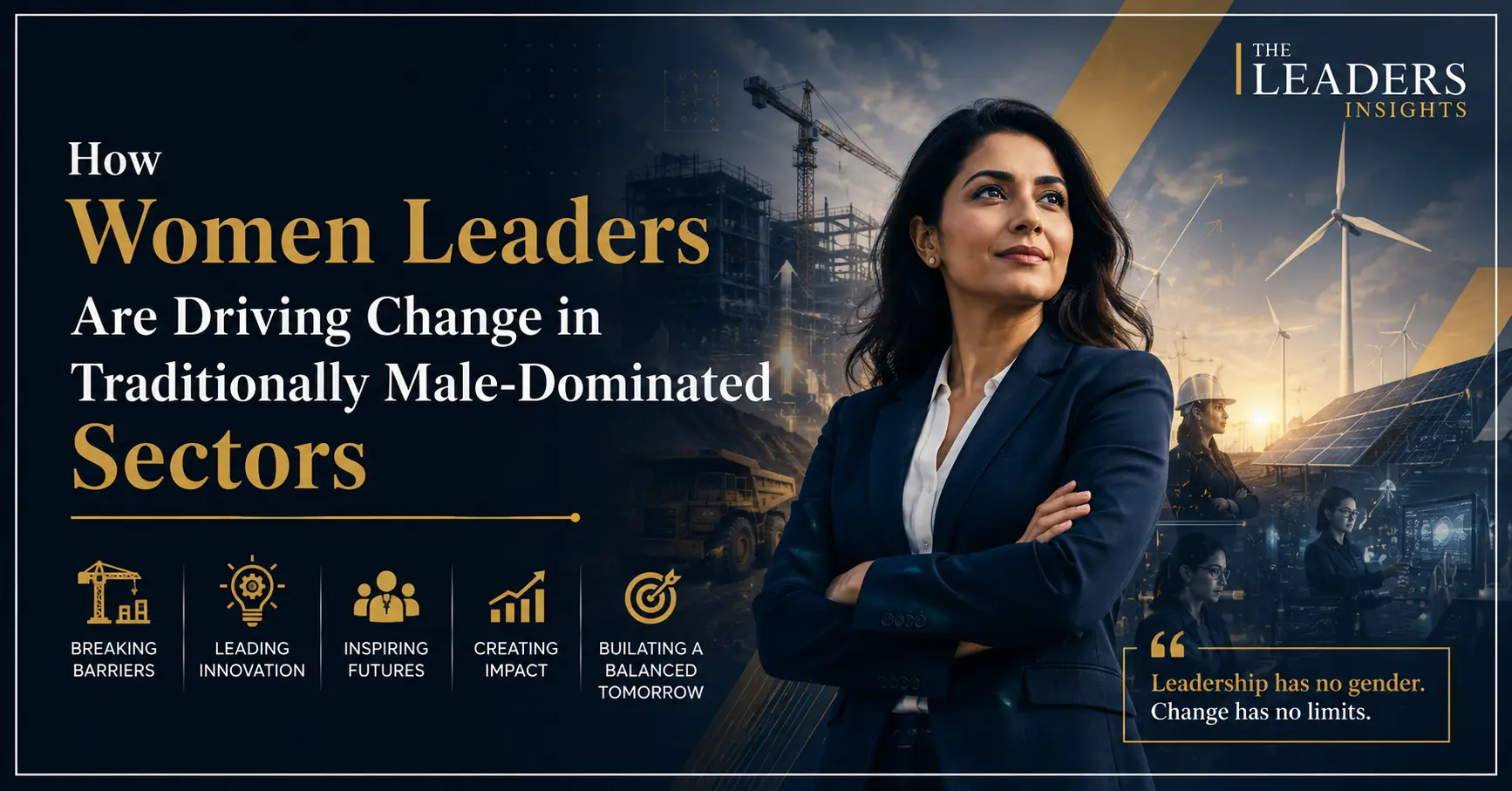
How Women Leaders Are Driving Change in Traditionally Male-Dominated Sectors
Across the United States, leadership is being redefined in industries that were historically shaped by male-dominated structures. From manufacturing, energy, construction, finance, defense, logistics, and technology to executive healthcare administration and academic leadership, women leaders are no longer entering these sectors as exceptions. They are influencing strategy, reshaping culture, and expanding what institutional leadership can look like.
This shift is not simply about representation. It is about transformation.
Women leaders are bringing new perspectives to industries facing complex pressures: workforce shortages, technological disruption, governance expectations, public trust, regulatory change, and global competition. Their leadership is helping organizations become more adaptive, more inclusive, and more prepared for the future.
For CEOs, founders, university leaders, healthcare executives, and CXOs, this is not a social conversation. It is a strategic leadership issue. Organizations that recognize and elevate diverse leadership perspectives are better positioned to compete in a world where innovation depends on broader thinking and deeper institutional awareness.
Leadership Change Is Moving from Symbolism to Strategy
For many years, women in male-dominated sectors were often discussed through the lens of access. The conversation focused on who was allowed into leadership rooms, boardrooms, operating floors, laboratories, investment circles, or executive decision-making spaces.
That conversation still matters, but the next phase is more significant. Women leaders are not only gaining access. They are shaping strategy.
In sectors such as engineering, infrastructure, energy, and technology, women executives are leading modernization efforts, guiding digital transformation, managing complex teams, and influencing long-term investment decisions. In finance and healthcare, they are helping organizations balance performance with responsibility, growth with trust, and innovation with stakeholder impact.
This represents a deeper leadership evolution. When women leaders hold real authority, the organization does not simply look different. It often begins to think differently.
The strongest institutions understand that leadership diversity is not a public relations message. It is a competitive advantage when it changes how decisions are made, how risks are evaluated, and how future opportunities are identified.
Women Leaders Are Expanding the Definition of Executive Strength
Traditional leadership models in male-dominated sectors often rewarded authority, speed, control, and individual confidence. While those qualities can still matter, today’s environment requires a more complete leadership profile.
Modern executive leadership demands strategic patience, emotional intelligence, stakeholder management, cultural awareness, ethical judgment, and the ability to lead through ambiguity. These qualities are increasingly critical in industries where public expectations are rising, and internal teams expect more human-centered leadership.
Women leaders are helping expand the definition of strength.
They are proving that decisiveness does not require distance. Authority does not require rigidity. Confidence does not require dominance. Strong leadership can include listening, collaboration, transparency, and accountability without weakening executive power.
This is particularly important in the United States, where organizations are managing multigenerational workforces, diverse customer bases, public scrutiny, and fast-moving market expectations. Leaders who can build trust across different groups are becoming more valuable than leaders who rely only on hierarchy.
The future of leadership will not belong to one narrow style. It will belong to leaders who can combine strategic clarity with human understanding.
Change Happens When Leadership Influences Systems
Women leaders create lasting impact when their success does not remain personal, but contributes to changing structures, opening opportunities, and shaping stronger systems for others.
A woman who reaches the C-suite in a male-dominated sector may inspire others. But a woman leader who changes hiring practices, mentorship pathways, promotion standards, workplace flexibility, governance expectations, or leadership development models creates institutional change.
This is where real progress happens.
In many industries, the challenge is not only that women have historically been underrepresented. The deeper issue is that systems were often designed around outdated assumptions about career paths, availability, leadership style, and professional credibility.
Women leaders are challenging these assumptions by building more sustainable leadership structures. They are asking whether talent is being recognized early enough. They are questioning whether high-potential professionals have access to sponsorship, not only mentorship. They are examining whether workplace cultures reward performance fairly or simply replicate old patterns of influence.
For American institutions competing for talent, these questions are not optional. They directly affect recruitment, retention, innovation, and long-term competitiveness.
Visibility Creates Momentum for the Next Generation
Visibility matters because leadership imagination is shaped by what people see.
When women lead in sectors where they were once underrepresented, they change the expectations of those coming behind them. Young engineers, medical professionals, entrepreneurs, researchers, finance professionals, and operations leaders are more likely to see a future for themselves when leadership pathways are visible.
This visibility is also important for institutions. Companies, universities, hospitals, and industry platforms that elevate women leaders send a message about the kind of leadership they value. They show whether advancement is truly based on capability, vision, and impact.
However, visibility must be meaningful. It cannot be limited to panels, campaigns, or symbolic appointments. Women leaders need authority, resources, decision-making power, and measurable influence. Without that, visibility becomes surface-level.
The most progressive organizations are not only celebrating women leaders. They are placing them where major decisions are made: strategy, capital allocation, innovation, governance, global expansion, crisis management, and institutional transformation.
That is where visibility becomes power.
Real-World Perspective: Industries Are Changing Because Leadership Expectations Are Changing
Across the United States, traditionally male-dominated sectors are facing a leadership reset. Manufacturing is becoming more technology-driven. Construction and infrastructure are becoming more complex and sustainability-focused. Healthcare is balancing innovation with access and affordability. Finance is navigating trust, regulation, and digital disruption. Technology is under pressure to address values, inclusion, and social impact.
These challenges cannot be solved by old leadership models alone.
Women leaders are helping organizations approach these pressures with broader intelligence. They are often more attuned to stakeholder complexity, workforce culture, and long-term trust. They bring perspectives shaped by navigating systems that were not always built for them, which can make them highly effective at identifying blind spots and challenging inherited assumptions.
This does not mean women lead in one uniform way. Women leaders are not a single category of leadership style. They are founders, operators, strategists, innovators, academics, investors, physicians, engineers, policymakers, and executives with strengths and visions.
The real significance is not that women leaders bring one specific approach. It is their presence that expands the range of leadership intelligence inside institutions.
The Future of Leadership Will Be More Inclusive and More Demanding
The rise of women leaders in traditionally male-dominated sectors is not a temporary shift. It is part of a larger transformation in how leadership value is understood.
The next era will reward organizations that can attract the best leadership talent, regardless of outdated assumptions. It will favor institutions that understand diversity as a source of strategic insight, not merely compliance. It will elevate leaders who can build trust, manage complexity, and guide organizations through uncertain global conditions.
For women leaders, the path ahead will continue to require resilience, excellence, and institutional support. For organizations, the responsibility is clear: create systems where leadership potential can rise without unnecessary barriers.
The United States has always been shaped by leaders who challenge what is possible. Today, women leaders are doing exactly that in sectors where change has often been slow.
They are not simply entering male-dominated industries. They are helping redefine them. The future of leadership will be stronger because of it.