
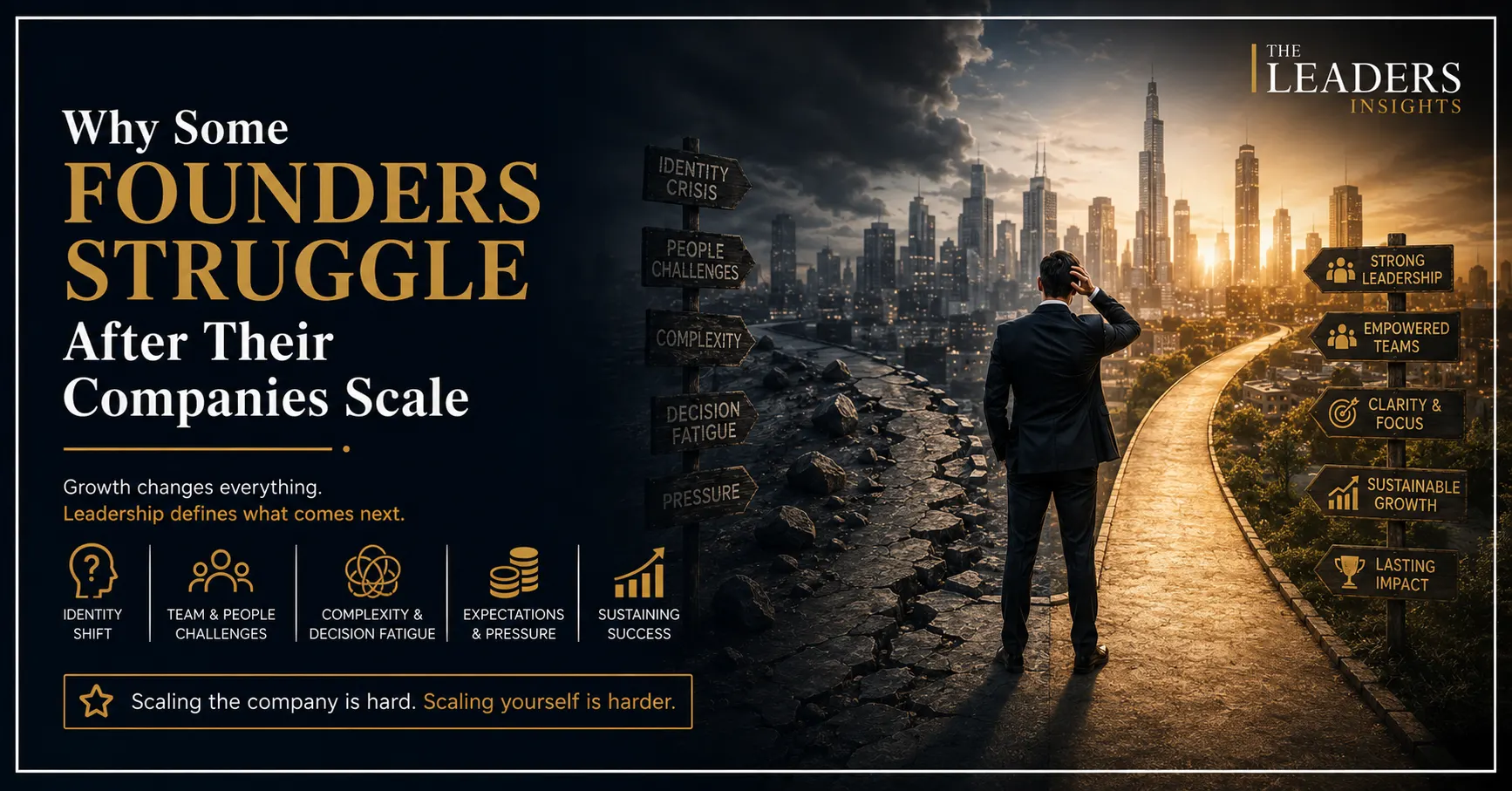
Why Some Founders Struggle After Their Companies Scale
Starting a company requires grit, creative problem-solving, and a willingness to defy conventional wisdom. In the early days, a founder is the ultimate generalist, writing code, pitching investors, answering customer service emails, and personally steering the business through initial hurdles.
However, a fundamental reality facing growing businesses across the United States is that what gets you from zero to one won’t get you from ten to one hundred.
When a business scales, the nature of the enterprise changes completely. The hands-on, high-velocity environment that startup creators thrive in gives way to organizational structures, corporate governance, cross-departmental coordination, and long-term planning.
While some executives transition seamlessly into enterprise CEOs, many brilliant founders find themselves struggling, frustrated, or ultimately displaced. Here is a breakdown of why this shift is so difficult and how leaders can navigate it successfully.
1. The Delegation Paradox (From Doing to Directing)
In an early-stage startup, speed is everything. Founders succeed because they step in directly to solve problems. If a marketing campaign isn’t converting, the founder writes the copy. If a key account is at risk, the founder jumps on a flight to save it.
When the company scales to hundreds of employees, this hands-on approach shifts from being an asset to a major operational bottleneck.
The Micromanagement Trap
Founders who struggle to delegate often suffer from what psychologists call the control illusion—the belief that if they don’t oversee every detail, quality will drop. This mindset leads to:
- – Operational Slowdowns: Department heads wait for founder approval on minor operational decisions.
- – Executive Burnout: The founder attempts to manage 15 direct reports while attending every strategy meeting.
- – Talent Attrition: Experienced executive hires leave because they feel micromanaged rather than empowered.
Successful scaling requires moving from direct execution to delegation with accountability.
2. Shift from Product Creation to Organizational Design
Most founders start companies because they are deeply passionate about a specific domain—whether building innovative software, designing consumer products, or disrupting healthcare logistics. They love the craft of creation.
When a company scales, the founder’s primary product is no longer the item or service being sold (the company itself becomes the product).
This transition requires building communication channels, establishing key performance metrics, and designing hiring frameworks. For founders who entered business purely to build products, spending 80% of their week on board alignment, performance reviews, and operational planning can feel uninspiring.
3. The Challenge of Replacing Early “War Time” Teammates
In the early days, startups rely on loyal generalists, team members who wear multiple hats and work around the clock to keep the company alive. These early employees share an intense bond forged through shared risk.
However, as departments specialize, the generalist skill set often hits a ceiling. Managing a 5-person sales team requires entirely different capabilities than leading a 150-person enterprise sales division.
| Phase | Ideal Teammate Profile | Primary Focus |
| 0 to 1 (Seed / Series A) | Flexible Generalists | Speed, adaptability, execution grit |
| 10 to 100 (Series B+) | Specialized Executives | Repeatable processes, team leadership, systems design |
One of the hardest psychological hurdles for scaling founders is realizing when an early hire is no longer the right fit for the next phase of growth. Founders who struggle often delay these tough decisions, placing personal loyalty above organizational requirements.
4. Loss of Direct Feedback Loops and Culture Friction
In a 10-person office, culture happens naturally over lunch or late-night brainstorms. Everyone understands the mission because they sit next to the founder every day.
At 250 employees spread across multiple regions, organic alignment vanishes.
Founders who struggle at scale often rely on informal communication long after it stops working. Information becomes fragmented, office politics emerge, and core company values lose clarity.
Key Insight: At scale, company culture is not defined by what the founder says in an all-hands meeting—it is defined by who gets hired, promoted, or let go.
Furthermore, scaling creates a layer of management between the founder and the front line. Leaders who once had immediate, unfiltered access to customer complaints and product bugs suddenly receive filtered status reports. Without deliberate efforts to stay connected to the floor, executives become disconnected from customer realities.
5. Evolving Board Dynamics and Investor Governance
As a company raises larger institutional rounds (Series B, C, and beyond), the board of directors undergoes a significant shift. The board transitions from an informal advisory group into a formal governance body with fiduciary duties to shareholders.
Early-Stage Board Dynamics:
Founder-Led Strategy –> Collaborative Mentorship –> Informal Guidance
Scale-Up Board Dynamics:
Metric-Driven Oversight –> Predictable Forecasting –> Formal Fiduciary Control
Scaling founders must manage board relationships with increased rigor:
- – Predictability Over Surprises: Board members expect accurate quarterly forecasting rather than wild swings in performance.
- – Governance Compliance: Financial audits, compliance standards, and risk mitigation become standing agenda items.
- – CEO Accountability: Founders should understand that the board works to protect and grow the company’s value. This includes deciding whether the founder is still the right person to serve as CEO.
How Founders Can Succeed at Scale
Transitioning from a startup founder to a scale-up CEO is not impossible, but it requires self-awareness and deliberate effort. The leaders who navigate this transition successfully adopt three key strategies:
- Hire Complementary Leadership Early: Pair visionary leadership with operational experience by hiring a strong Chief Operating Officer (COO) or President.
- Commit to Personal Executive Coaching: Work with mentors and executive coaches who have successfully scaled organizations through similar milestones.
- Know When to Transition the Seat: Some founders realize their true passion lies in product strategy rather than corporate management. Stepping into a Chief Product Officer (CPO) or Executive Chairman role while bringing in a professional CEO can be a winning strategy for both the founder and the company.
Summary
The qualities that make a founder successful at launch (relentlessness, direct involvement, and rapid experimentation) are very different from the skills required to run a scaled organization. By recognizing the need to transition from hands-on execution to systemic leadership, empowering specialized managers, and building clear organizational structures, founders can navigate the challenges of scaling and build lasting, impactful companies.