The Legacy Mindset: How Mike Murchison Is Building Long-Term Value
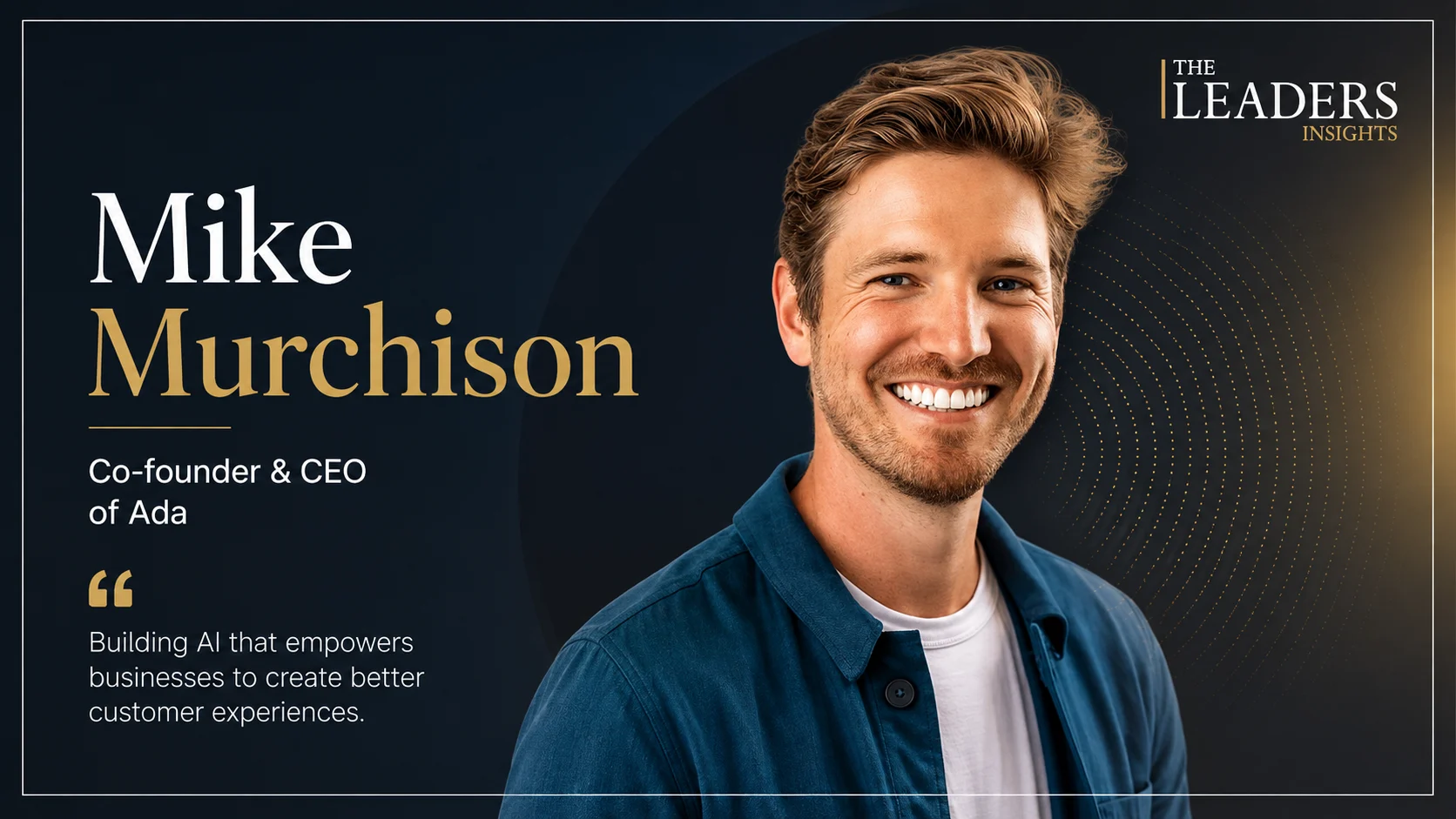
In an era where tech companies are born, hyped, and acquired in the span of a few product cycles, true business craftsmanship is becoming a rarity. The pressure to deliver quick quarterly wins often overshadows the messy, patient work of building something that lasts. Yet, Mike Murchison, the co-founder and CEO of Ada, is deliberately choosing a different path.
By anchoring his enterprise customer experience platform in real human experience, Murchison is demonstrating how a legacy mindset can drive generational value in a rapidly changing world.
1. The Antidote to the Hype Cycle
In tech circles, the temptation to chase the next shiny feature is immense. However, Murchison’s leadership style stands out because he anchors his business strategy in a timeless principle: solving human problems first, and letting the technology be the vehicle second.
[ Deep Human Empathy ] ──> [ Manual Problem Solving ] ──> [ Scale via AI Agents ]
This outcome-first approach prevents Ada from falling into the trap of deploying technology just for technology’s sake. Instead of racing to release unproven features to satisfy market trends, Murchison focuses on building deep, operational infrastructure designed to handle complex enterprise needs. It is a strategy built on the belief that long-term enterprise relationships are forged through reliability, trust, and proven customer retention, not flashy software pilots that stall out under pressure.
2. Earned Empathy: The Value of Starting in the Trenches
The foundation of Murchison’s approach dates back to 2016, well before the modern AI boom. When he and his co-founder, David Hariri, realized that legacy customer service software was broken, they didn’t sit in an ivory tower sketching theoretical wireframes.
They embedded themselves directly into the workforce:
- Joined seven different customer support teams as front-line agents.
- Logged thousands of hours answering repetitive inquiries by hand.
- Felt the exact daily frustrations, friction points, and limitations that human agents face.
Murchison famously refers to this grueling process as experiencing the “physical pain” of a problem. He firmly believes that you cannot write meaningful software until you have manually suffered through the workflow it is meant to fix. This manual groundwork fundamentally changed the trajectory of the company. It meant that when they finally wrote the code for Ada, the platform was treated as “medicine” to cure real operational wounds, rather than just another operational metric to optimize.
3.Redefining Value: From Cost Reduction to Revenue Growth
Historically, corporate executives viewed customer service as a cost center—a defensive line item aimed purely at keeping overhead expenses as low as possible. Murchison’s long-term vision actively rejects this narrow view. He has consistently pushed enterprise brands like Square, YETI, and Monday.com to look at customer interactions as a growth engine.
| The Traditional Mindset | The Legacy Mindset (Murchison’s Approach) |
| Goal: Deflect and minimize customer interaction. | Goal: Build long-term customer lifetime value. |
| Metrics: Average handling time and cost per ticket. | Metrics: Autonomous resolution and customer satisfaction. |
| Method: Static, frustrating chatbot menus. | Method: Empathetic, personalized reasoning AI agents. |
| Impact: High churn rates and agent attrition. | Impact: Organic upsells and proactive retention. |
By designing AI agents capable of reasoning, accessing complex corporate knowledge base systems, and executing secure background tasks, Ada empowers brands to meet consumers on their own terms. The goal is to build a system so personalized and intuitive that the customer never feels ignored or passed over. This shifts the conversational focus from cheap deflection to long-term trust and loyalty.
4. Craftsmanship in an Age of Automated Abundance
As AI tools become a commodity, Murchison has emerged as an outspoken champion for corporate and creative integrity. He frequently speaks on the value of personal conviction and product craftsmanship. In his view, when the basic raw materials of content and software code become infinitely abundant, the only asset that truly matters is the human taste, review, and personal accountability behind it.
This perspective shapes how he leads Ada. He doesn’t encourage the team to mask their technology behind vague disclaimers. Instead, he advocates for owning the work boldly, collaborating openly with AI tools, and obsessing over the final user experience.
This standard of accountability requires immense discipline. It means refusing to rush half-baked software solutions to market simply to win headlines, ensuring that automated interaction maintains a high standard of precision, safety, and brand alignment.
5. Cultivating a Generational Tech Ecosystem
Building long-term value extends far beyond a company’s internal balance sheet. True legacy requires investing heavily back into the environment that nurtured you. As a proud advocate of the Canadian innovation ecosystem, Murchison dedicates significant personal energy to supporting the next wave of founders.
He frequently returns to his roots at the University of Toronto and serves as a mentor at the Creative Destruction Lab, urging students to embrace experimental failure early in their careers. By actively sharing hard-earned infrastructure playbooks and pushing for broader domestic AI adoption, he is helping lay the foundations for a sustainable, resilient technology community.
The Long Horizon
Ultimately, Mike Murchison’s leadership proves that the most sustainable way to build for the future is to remain firmly grounded in the realities of the present. By pairing a deep empathy for human work with a patient, disciplined approach to enterprise AI operations, he is charting a stable path forward.
He reminds us that true enterprise value isn’t captured during a brief technology hype cycle. It is carefully built, piece by piece, by leaders who aren’t afraid to get their hands dirty in the trenches.