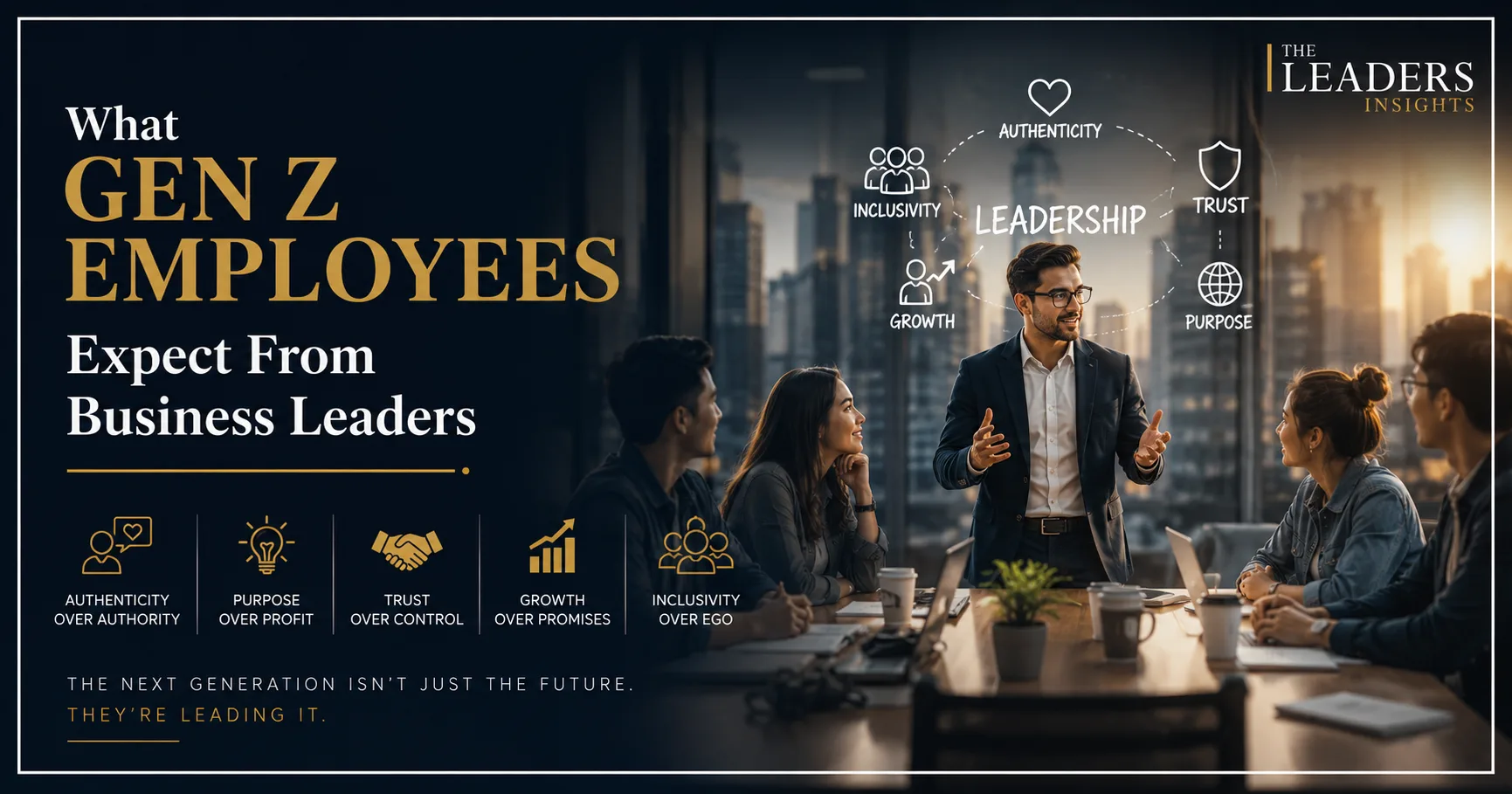
What Gen Z Employees Expect From Business Leaders
A quiet revolution is happening across American workplaces. Generation Z (those born roughly between 1997 and 2012) is rapidly expanding its presence, already accounting for nearly 30% of the global workforce. As Baby Boomers retire and traditional corporate hierarchies shift, business leaders across the United States are discovering a clear reality: the management playbooks of the past no longer apply.
Gen Z isn’t asking for ping-pong tables, free snacks, or corporate jargon. Having entered the labor market during global pandemics, economic shifts, and a mental health crisis, this generation brings a practical, human-first perspective to the office. They view work as an integrated part of a healthy life rather than its sole defining feature.
For business leaders, executives, and managers, understanding what drives Gen Z isn’t just an HR initiative; it is a core strategy for talent retention, innovation, and long-term business growth.
1. Coaching Over Command-and-Control
The days of top-down management are fading. Gen Z employees reject authoritarian “do it because I said so” leadership styles. Instead, they expect their managers to act as coaches, mentors, and facilitators.
- – Real-Time, Ongoing Feedback: Annual performance reviews feel outdated to a generation raised on instant communication. They want frequent, low-stakes check-ins to know where they stand and how they can improve.
- – Context and “The Why”: Rather than simply assigning tasks, effective leaders explain why a project matters, how it fits into broader company goals, and what impact it delivers.
- – Psychological Safety: Gen Z looks for managers who invite questions and value input. They expect leaders to create environments where admitting a mistake is viewed as a learning opportunity rather than a failure.
2. Uncompromising Transparency and Authenticity
Raised in a digital landscape flooded with marketing noise and automated content, Gen Z has a high baseline for detecting insincerity. They demand radical transparency from executive leadership.
Executives can foster trust by embracing three practical shifts:
- – Be Honest About Challenges: When a company hits a bump in the road—whether a missed quarterly goal or a strategy shift- leaders should communicate openly rather than sugarcoating the situation.
- – Admit What You Don’t Know: Leaders don’t need to have every answer. Vulnerability builds credibility; pretending to have all the answers breaks it.
- – Ditch the Corporate Speak: Clear, direct, conversational language resonates far better than buzzwords and guarded corporate messaging.
Pro Tip: Gen Z respects leaders who lead with personal authenticity. If executive decisions feel disconnected from company values, Gen Z employees won’t hesitate to seek opportunities elsewhere.
3. Prioritizing Mental Health and Real Work-Life Integration
Mental health is no longer viewed as an optional workplace benefit; it is a baseline operational expectation. With high reported levels of early-career burnout, Gen Z treats personal well-being as essential to sustainable productivity.
Workplace flexibility goes well beyond allowing remote work days; it centers on autonomy and trust. Leaders who measure outcomes rather than hours spent at a desk build stronger, more loyal teams.
How Leaders Support Mental Health & Flexibility:
- – Respect Boundaries: Avoid sending late-night emails or expecting immediate responses outside of core working hours.
- – Encourage Time Off: Model healthy habits by taking time off yourself and actively encouraging team members to recharge.
- – Flexible Work Arrangements: Offer hybrid options or core operating hours where team members can structure their workdays around their peak energy levels.
4. Clear Pathways for Career Growth and Skill Building
Gen Z is widely recognized as an ambitious, growth-focused generation. However, they expect faster feedback loops regarding their progression than previous generations did. Sitting in an entry-level role for three years without clear milestones or development conversations often leads to early turnover.
| Key Priority | What Traditional Management Did | What Gen Z Expects Today |
| Career Pathing | Vague, time-based promotions (e.g., “Wait 2 years”) | Skill-based milestones and clear progression roadmaps |
| Learning & Upskilling | Occasional, annual group workshops | Continuous, self-paced learning and AI tool integration |
| Recognition | Annual bonuses or formal ceremonies | Weekly, specific praise for contributions |
| Role Structure | Rigid job descriptions | Cross-functional projects and internal mobility |
Executives who invest in continuous learning programs and provide clear pathways for internal mobility significantly increase retention among younger talent.
5. Purpose-Driven Work and Ethical Alignment
While competitive compensation remains vital (especially in an economy marked by living costs and inflation), Gen Z refuses to separate their paycheck from their values. Over two-thirds of Gen Z job seekers prioritize working for organizations whose core values align with their own.
Leaders must demonstrate that their company’s mission statement is more than marketing text on a wall:
- – Actions Over Statements: Whether addressing sustainability, diversity, equity, and inclusion (DEI), or community involvement, Gen Z looks for tangible, measurable actions rather than empty press releases.
- – Ethical Leadership: They want assurance that leadership makes decisions with long-term human impact in mind, not just short-term profit margins.
- – Individual Purpose: Help Gen Z employees see how their daily responsibilities directly contribute to the organization’s overarching mission.
Summary for Leaders
Managing Gen Z isn’t about catering to unrealistic demands; it’s about evolving corporate culture to meet modern expectations. By focusing on coaching, radical transparency, flexibility, career progression, and purpose-driven work, leaders can unlock the potential of the fastest-growing segment of the American workforce.
When leaders create environments where Gen Z employees feel heard, valued, and supported, they don’t just retain young talent; they build a more resilient, innovative, and human-centered business.