
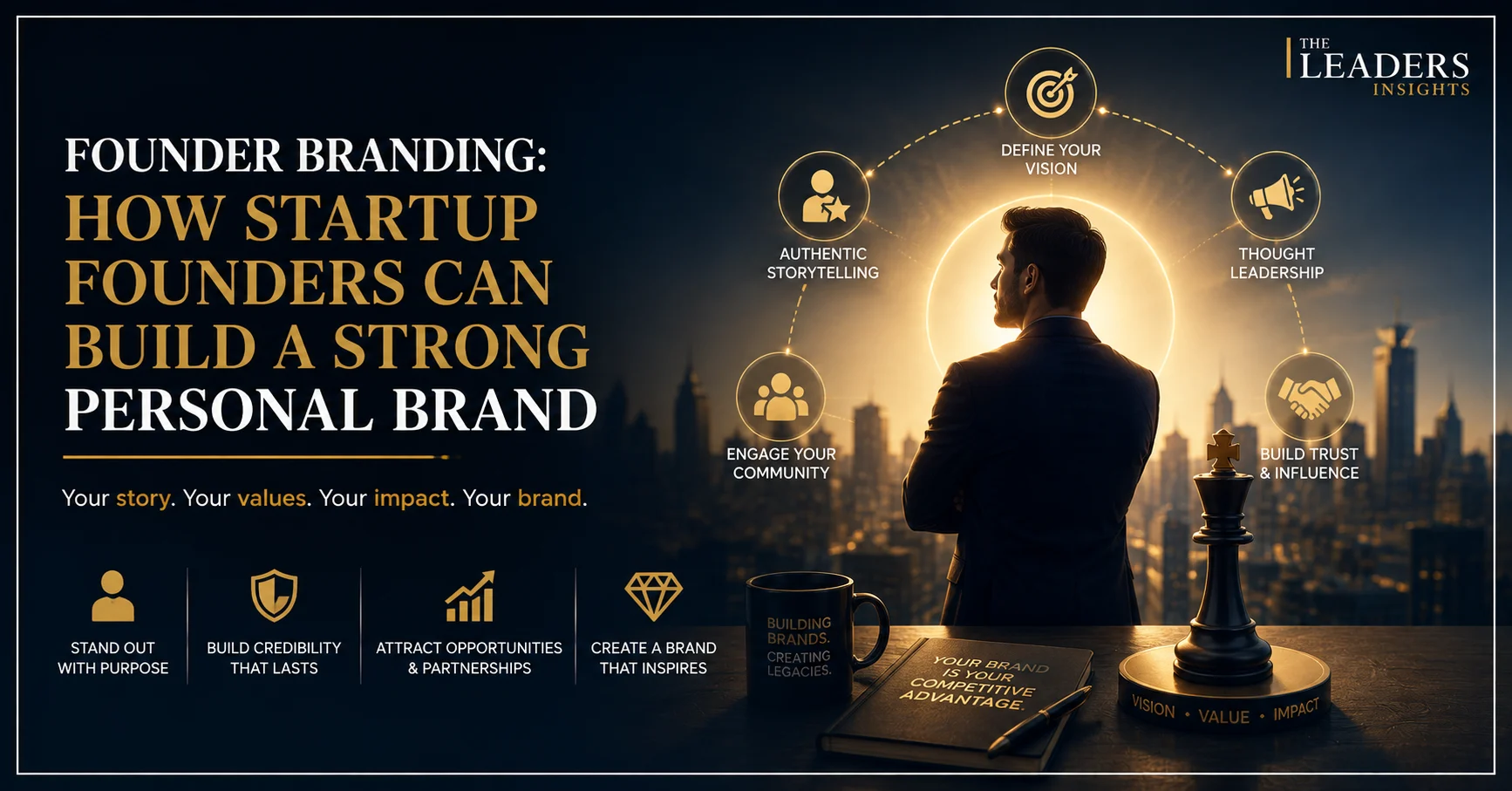
Founder Branding: How Startup Founders Can Build a Strong Personal Brand
Every successful startup has a story, and behind every great story is a founder. While products, funding, and business strategies are important, today’s business world is placing more attention on the people leading companies. Customers, investors, employees, and business partners increasingly want to know who they are doing business with, not just what a company sells.
This is where founder branding becomes important.
Founder branding is the process of building a professional reputation that reflects your expertise, values, leadership style, and vision. It helps people understand who you are, what you stand for, and why they should trust your company.
Some of the world’s most recognized companies have founders whose personal brands are almost as well known as their businesses. Leaders like Jensen Huang of NVIDIA, Brian Chesky of Airbnb, Melanie Perkins of Canva, and Marc Benioff of Salesforce regularly share their experiences, insights, and vision. Their visibility has strengthened not only their personal reputation but also the credibility of their companies.
For startup founders, building a personal brand is no longer optional. It has become a competitive advantage that can help attract customers, investors, employees, media attention, and business opportunities.
Whether you’re launching your first startup or scaling a growing business, investing in your personal brand can create long-term value for both you and your company.
Why Founder Branding Matters
People connect with people before they connect with companies.
A startup may have an innovative product, but potential customers often look at the founder before making a decision. Investors research leadership teams before investing. Job seekers want to understand who they will be working with. Journalists often interview founders rather than companies.
A strong founder brand helps answer important questions:
- – Can this founder be trusted?
- – Do they have industry expertise?
- – What vision are they pursuing?
- – Are they building a company people want to support?
Founder branding creates familiarity, and familiarity builds trust.
It also helps startups stand out in competitive industries. Hundreds of companies may offer similar products or services, but founders with authentic, consistent personal brands often receive more attention because people remember their stories and perspectives.
A strong personal brand also benefits the business during challenging times. Companies may experience setbacks, but founders who have built trust over time often retain the confidence of customers, investors, and employees.
1. Define What You Want to Be Known For
Every strong personal brand begins with clarity.
Before creating content or becoming active on social media, ask yourself:
- – What industries do I want to be associated with?
- – What topics can I genuinely speak about?
- – What values define my leadership?
- – What problems am I passionate about solving?
Trying to discuss every trending topic often weakens a personal brand. Instead, focus on a few areas where your experience provides real value.
For example, a healthcare founder may consistently discuss patient care, healthcare technology, and innovation. A fintech entrepreneur may focus on digital payments, financial inclusion, and startup growth.
Consistency helps people recognize your expertise.
2. Share Knowledge Instead of Promoting Yourself
One of the biggest misconceptions about personal branding is that it requires constant self-promotion.
In reality, the strongest founder brands educate rather than advertise.
Share lessons you’ve learned while building your company. Discuss industry trends, leadership experiences, customer insights, or mistakes that taught valuable lessons.
People appreciate practical knowledge far more than promotional content.
Instead of saying:
“Our company is the best.”
Share something like:
“Here’s one lesson we learned after speaking with our first 500 customers.”
Educational content builds credibility naturally.
3. Be Authentic
Authenticity has become one of the most valuable qualities in leadership. People can usually tell when content feels scripted or overly polished.
You don’t need to present yourself as someone who has all the answers. Share real experiences, challenges, successes, and lessons learned.
Founders who openly discuss setbacks often build stronger relationships than those who only celebrate achievements.
4. Build a Strong LinkedIn Presence
For founders in the United States, LinkedIn remains one of the most effective platforms for building a professional brand.
A complete profile, consistent posting, thoughtful comments, and meaningful conversations can significantly increase visibility among investors, executives, journalists, and potential customers.
Share:
- – Industry insights
- – Leadership lessons
- – Company milestones
- – Event experiences
- – Business observations
- – Team achievements
Avoid treating LinkedIn like an advertising platform. Instead, use it to contribute valuable ideas to professional conversations.
5. Become a Thought Leader
Thought leadership isn’t about being famous; it’s about being helpful.
Founders can establish authority by publishing articles, participating in podcasts, speaking at conferences, joining panel discussions, or contributing expert opinions to industry publications.
Over time, these activities position you as someone whose perspective is respected within your industry.
When people consistently associate your name with valuable insights, your personal brand becomes a powerful business asset.
6. Tell Stories, Not Just Statistics
People remember stories much longer than numbers.
Instead of simply announcing company growth or funding milestones, explain the journey behind those achievements.
Share:
- – Why you started the company
- – Customer success stories
- – Lessons from failure
- – Difficult decisions
- – Leadership experiences
- – Moments that changed your business
Stories create emotional connections, making your content more memorable and engaging.
7. Stay Consistent
Building a personal brand doesn’t happen overnight.
Posting several times one week and disappearing for months makes it difficult to build recognition. Consistency matters more than frequency.
Whether you publish once a week or three times a week, maintain a regular schedule that your audience can expect.
The same applies to your messaging.
Your values, communication style, and expertise should remain consistent across interviews, social media, articles, podcasts, and public appearances.
8. Engage With Your Community
Founder branding is not a one-way conversation.
- – Respond to comments.
- – Answer thoughtful questions.
- – Support other entrepreneurs.
- – Celebrate your team’s achievements.
- – Join discussions within your industry.
People remember leaders who genuinely engage with others rather than simply broadcasting their own achievements. Strong relationships often lead to partnerships, referrals, speaking invitations, and new business opportunities.
9. Let Your Team Share the Spotlight
Great founders understand that personal branding should strengthen the company, not overshadow it.
Celebrate employees, recognize team achievements, and share customer success stories.
Highlighting others demonstrates confidence and strong leadership while showing that success is a collective effort.
People are naturally drawn to leaders who invest in their teams.
10. Build Trust Before You Need It
One of the greatest advantages of founder branding is that trust accumulates over time.
Don’t wait until you’re raising investment, launching a product, or facing a crisis to become visible.
Founders who consistently share valuable content and engage with their audience build credibility long before they need public support.
When opportunities arise, people already know who you are and what you represent.
Common Mistakes to Avoid
Even experienced founders can make mistakes while building their personal brands.
One common mistake is focusing too heavily on self-promotion. Constantly talking about achievements without providing value can make content feel like advertising rather than leadership.
Another mistake is trying to imitate other founders. Every entrepreneur has a unique journey, personality, and leadership style. Authenticity always resonates more than imitation.
Inconsistency is another challenge. Publishing regularly for a short period, then disappearing makes it difficult to build trust and recognition.
Some founders also avoid engaging with their audience. Personal branding isn’t just about posting content—it’s about building relationships through meaningful conversations.
Finally, many entrepreneurs overlook the importance of listening. Great leaders pay attention to customer feedback, industry trends, and community discussions. Listening often creates better content than speaking alone.
Benefits for Startups and Investors
Founder branding creates value that extends beyond individual recognition.
For startups, a visible founder can increase brand awareness, attract talented employees, strengthen customer trust, generate media coverage, and improve business development opportunities.
A founder’s reputation often becomes one of the company’s strongest competitive advantages, particularly during the early stages when brand recognition is still developing.
Investors also benefit from strong founder branding. Venture capital firms frequently evaluate leadership alongside business fundamentals. Founders who communicate clearly, demonstrate expertise, and inspire confidence often build stronger relationships with investors.
Customers are also more likely to support companies led by people they trust. Employees feel more connected to organizations where leaders communicate openly and share a clear vision for the future.
In many cases, founder branding helps accelerate growth by creating opportunities that traditional marketing alone cannot achieve.
Conclusion:
Founder branding has evolved from a personal marketing strategy into an essential part of modern business leadership. In today’s connected world, people invest in leaders just as much as they invest in products and companies.
Building a strong personal brand doesn’t require becoming a celebrity or constantly seeking attention. It requires consistency, authenticity, valuable insights, and a genuine commitment to helping others.
The most respected founders are not simply promoting their businesses—they are educating their industries, sharing meaningful experiences, supporting their communities, and leading with purpose.
For startup founders, investing in a personal brand is an investment in the company’s future. A trusted founder can open doors to partnerships, attract top talent, strengthen investor confidence, and create lasting relationships with customers.
As the startup ecosystem continues to grow, founders who combine innovation with authentic leadership will be the ones remembered long after products and technologies evolve. In the end, a strong personal brand isn’t about being the loudest voice in the room; it’s about becoming a trusted voice that people choose to follow.